

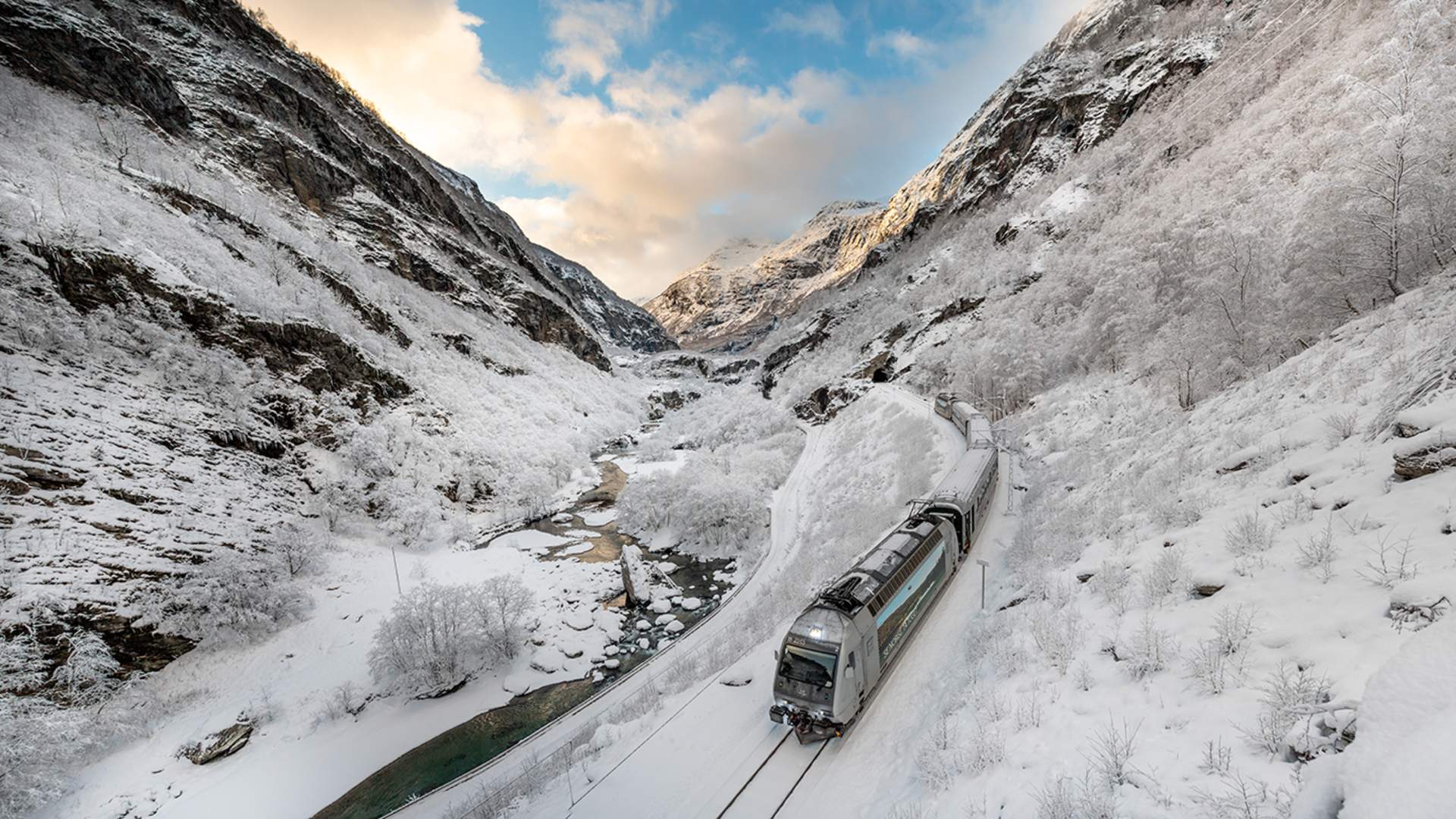
The big question that everybody asks about Scandinavia is… “What is the best time of the year to visit?” Should it be Spring or Summer when the weather is benign, the days long and the people are out and about celebrating their season in the outdoors? Or should it be Winter when the snow and ice sparkle in moonlight and Northern Lights dance across the sky? My answer? Do both. The “best time” myth has plagued Scandinavia for a while now. Any time is the right time, so long as you understand what to expect and know what you’re looking for. Scandinavia in Summer bursts with life; a beautiful orchid that blooms extravagantly for the long days of the season. In Winter it is the beauty of an extraordinary frozen landscape where Birch and Pine trees drip icicles and the air is crisp, dry and freezing (So long as you’re dressed sensibly this isn’t a problem).
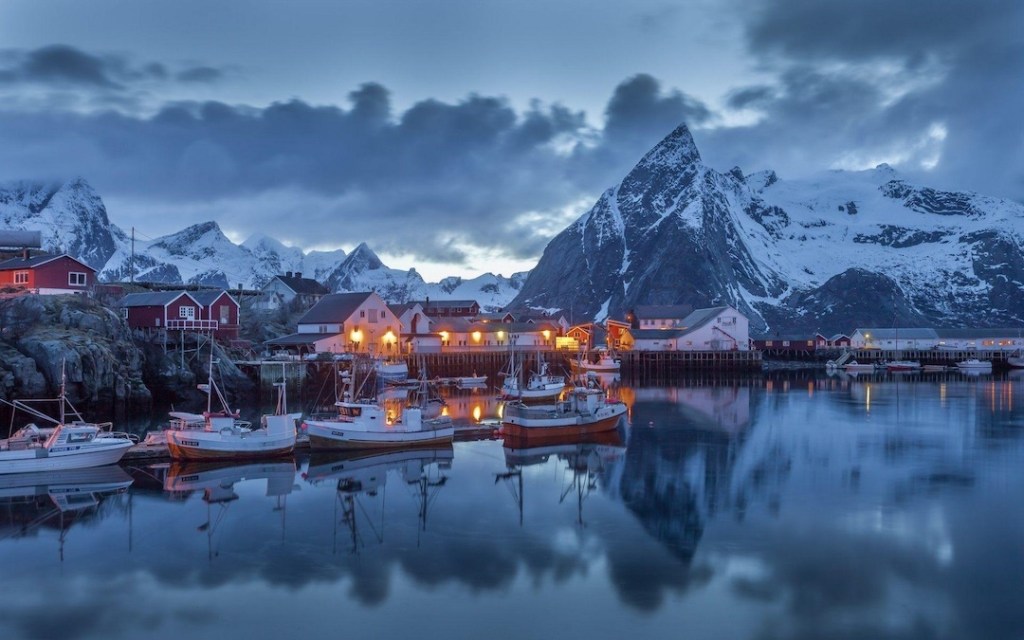
Let’s check that we all have the same understanding of what Scandinavia actually is – the Nations of Norway, Sweden & Denmark. These three countries have been fighting and invading each other, and making alliances over the course of history, and it wasn’t until the mid 19th Century that they all got thoroughly bored with it and settled down into a sort of peaceful common language family. Scandinavia doesn’t include Finland which has a completely different language and has historically, had closer ties with Russia.
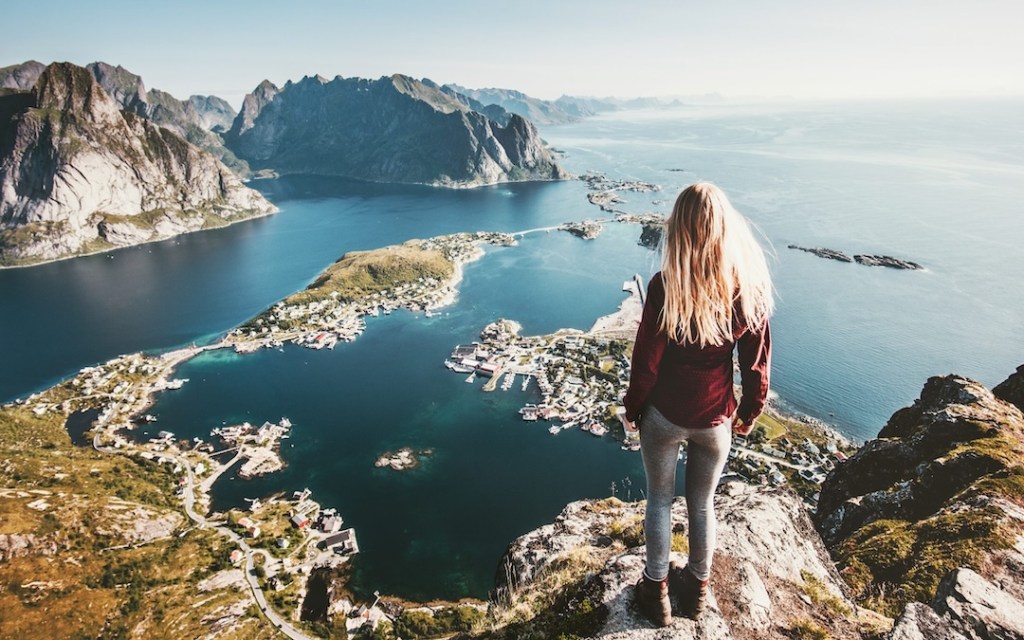
The countries are very different, each having their own national character and distinctive geography. Denmark – Small, flat and agricultural; Sweden, think islands, lakes and forests; and for Norway think fjords and mountains. They can more or less understand each other’ languages, although regional dialects and accents occasionally present a challenge. The climates of all three nations are temperate in the South (It gets surprisingly warm in Summer) where the majority of all populations live. The North is pleasant but chilly in Summer, even just above the Artic Circle – but Summer is short (2 – 3 Months) and before you know it life above the Artic Circle returns to more like what you expect.
Which country has more islands than any other in the world? Sweden… has the most, with an extraordinary total of approximately 267,570 islands. However, only about 984 of these islands are inhabited.
Norway has the third longest coastline in the world and the longest one in Europe. It is 58,133 km/ 36,122 miles long.
We tend to think of Scandinavians as peaceful, thoughtful and self-contained people but back in their time they were influential and successful global explorers. From the late 8th to the late 11th centuries, Scandinavian Vikings raided, pirated, traded, and settled throughout parts of Europe, the Mediterranean and as far away as Nova Scotia. Evidence of this past is still scattered throughout all three nations. There’s another thing that the countries share, although it originated in Sweden, named the concept of Fika. The word can used as both a noun and a verb and refers to a social gathering with coffee and pastries (usually cinnamon buns). You can Fika at any time of day, or several times a day, and some Scandinavian countries write Fika breaks into employee contracts. It’s a very sensible and civilised concept, and for me personally, those two adjectives sum-up and define the Scandinavian nations. It always feels (to me) like you are visiting a country populated, and run by, adults.
There’s one country that I haven’t yet mentioned, Lapland. It’s not actually a country, but a region. It swings in a wide arc through the North of the Scandinavian Peninsula, and includes Northern parts of Norway, Sweden, Finland and the Kola Peninsula of Russia. The natives of Lapland are known as Sámi people. They are traditionally nomadic, following the reindeer herds and they have freedom of movement to move with the herds across the borders of all three Scandinavian countries (but not Russia). Several GRJ Tours include time spent with the Sámi people and those days are Tour highlights for me. Sitting on a Reindeer fur draped wooden bench in front of a fire in a circular wooden Sámi hut, listening to stories of the giant reindeer herd migrations.These wonderful people are the cowboys of Northern Europe.
Finally (since I love my trains) I’ll list my top three railway routes for Scandinavia. You may have your own preferences, but for me, these lines always please and are listed in reverse order.
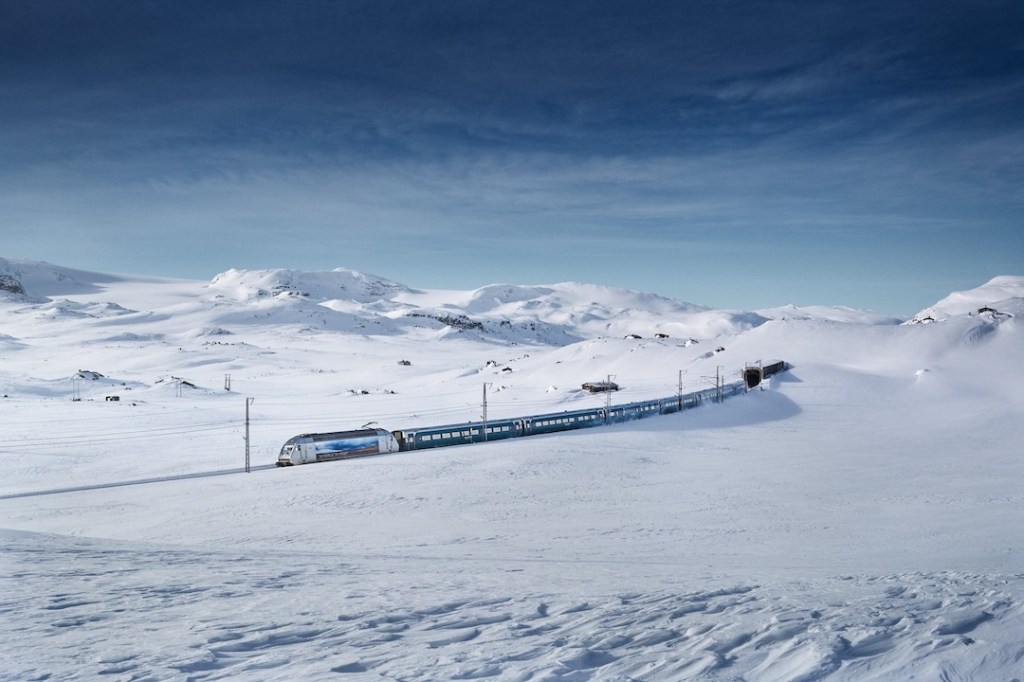
- The Bergen Railway Running for 500 Kilometres between Oslo and Bergen it climbs to about 3,500 feet and runs across a plateau that is up near the snow line year round. The flagship route of Norwegian Railways, the trains themselves are modern, fast and clean and the windows are large. Seats are comfortable and the dining car is excellent, with tables and seats. It is best enjoyed with one of their superb Hot-Dogs served with mashed potatoes and fried onions (Trust me on that, even if you think you won’t like it – you’re wrong!)
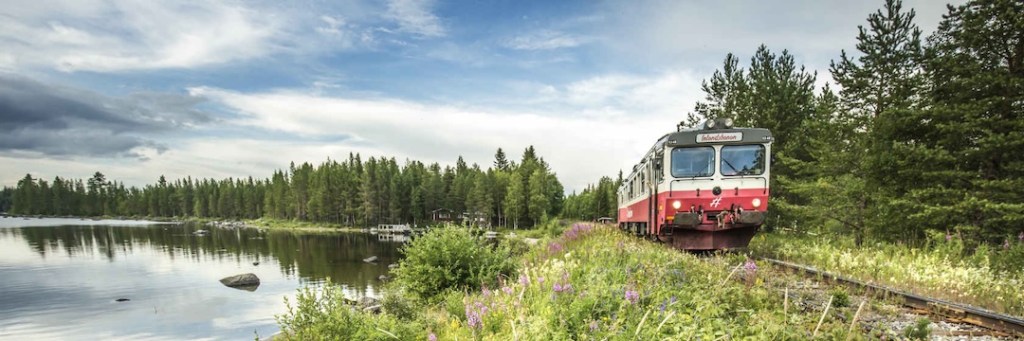
- The Inlandsbanan – This brave little train runs up the spine of Sweden for just over 800 miles, from Kristinehamn in the south to Gällivare in the north, linking small communities. The train is tiny, consisting of two elderly diesel railcars. The conductor provides commentary, the driver is happy to accept visitors in the cab and there’s always a sort of ad-hoc community spirit that develops. My favourite feature is that the train stops for lunch at a small restaurant in the middle of nowhere.
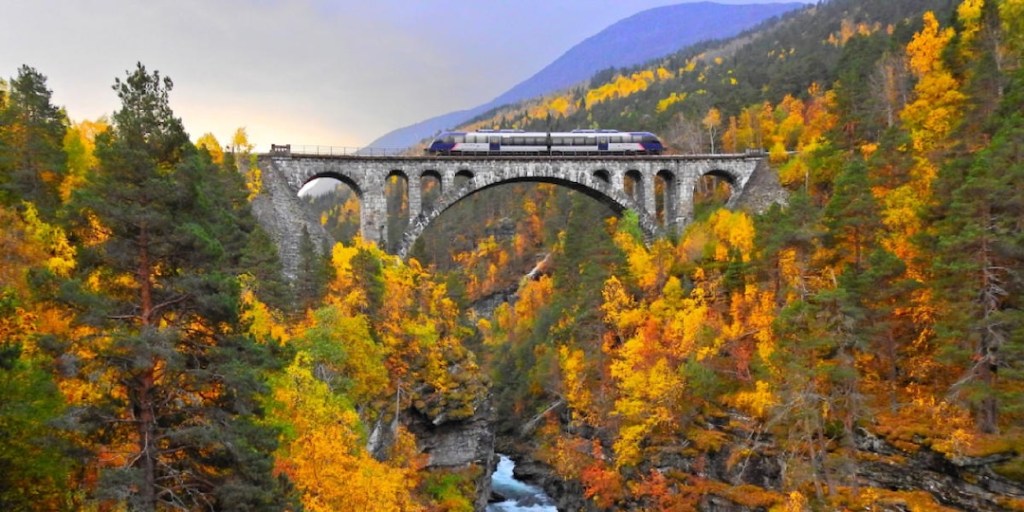
- The Rauma Line – Once again a brave little double car diesel train, this time in Norway, it runs for about 70 miles down the Romsdalen valley, between Åndalsnes and Dombås. The scenery is astonishing, with the line dropping 2,200 feet and running around a double horseshoe curve, past the Trollveggen (Troll Wall), the tallest vertical rock face in Europe, the Vermafossen waterfall and across the Kylling Bridge. The route has attracted Hollywood and was featured in Harry Potter and the Half-Blood Prince and Mission: Impossible – Dead Reckoning – Part One – Tom Cruise jumps off a mountain on a motorbike and parachutes onto the top of the Rauma Line train, fights the villain on the carriage roof (as you do) and escapes as the Kylling Bridge is blown up; I’m exhausted just writing that!
Please let me know if you know of better Scandinavian railway lines, or if you have a preference on the best time of year to visit. Alternatively, just make the decision for yourself and go
Scandinavian food is diverse, fresh and healthy, using simple and natural ingredients and combining them in delicious but unexpected ways. As you head North expect to see Reindeer and Moose somewhere on the menu but to get the most from Scandinavia, explore the fish recipes. Every Winter, millions of cod migrate to the Lofoten Islands from the Barents Sea in order to spawn. Gravlax, Pickled herring and Smoked cod roe are widely enjoyed. For me, the Norwegian brown cheese, Brunost, is like catnip, and reason enough to visit Norway on its’ own.
Scandinavian alcohol is expensive. All three countries have flirted with prohibition in the past and alcohol nowadays is highly taxed and (Norway, Sweden) only sold through state run monopoly outlets. Scandinavians tend to drink at weekends and with friends at parties rather than nightly during the week. That said, when they go for it they don’t hold back and some brands of Aquavit (local spirit) could stun a mule. If you’re an alcoholic, or thinking of becoming one, this might not be the destination for you


