One of the most fascinating things about my clients is the diversity of backgrounds, careers, hobbies and interests that they bring with them. For some, a Tour can represent the realisation of a long-held dream to visit somewhere. For others, it can be a missing tick in the box for countries or regions or an expression of their wanderlust. Occasionally, the reasons for joining a Tour can be more complex than I first suspected. I think this is a lovely story, but it takes some explanation, so trust me and hang in there.
The Second World War was a tough time for Italy. They followed the wrong man (Benito Mussolini) and chose the wrong side in the Axis alliance with Nazi Germany and Japan and they paid a very heavy price as a consequence of these bad decisions. Following surrender to the allies in 1943, Italy was effectively occupied by the Nazis who committed numerous atrocities. The course of the war after the allied invasion of Sicily in 1943, and then the Italian mainland campaign through 1944 – 1945 ensured the near total destruction of numerous towns and villages, and the bombing campaign brought similar damage to some of the larger cities. Although allied forces frequently felt great pity for the Italians, for many, particularly those who had lost friends and family to Italian forces during the first part of the war, there was a feeling that Italy had brought destruction upon itself.
As allied forces fought their way up Italy, they encountered a series of strong defensive lines, in terrain that always favoured the defender. The winter of 1943/44 was one of the worst in living memory and life for the soldiers on both sides was uncomfortable and very dangerous.
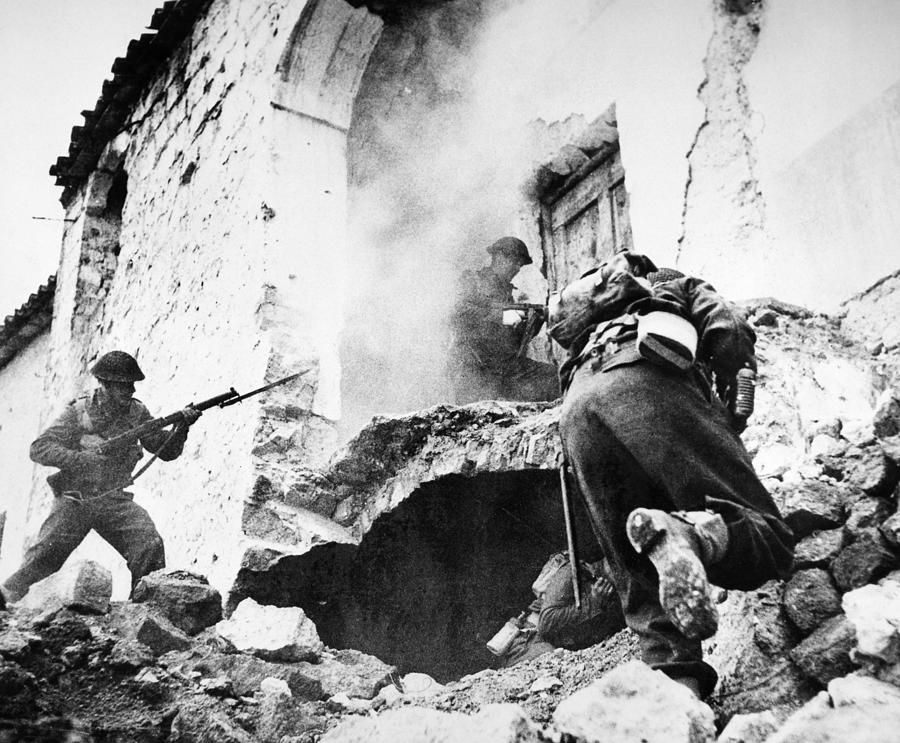
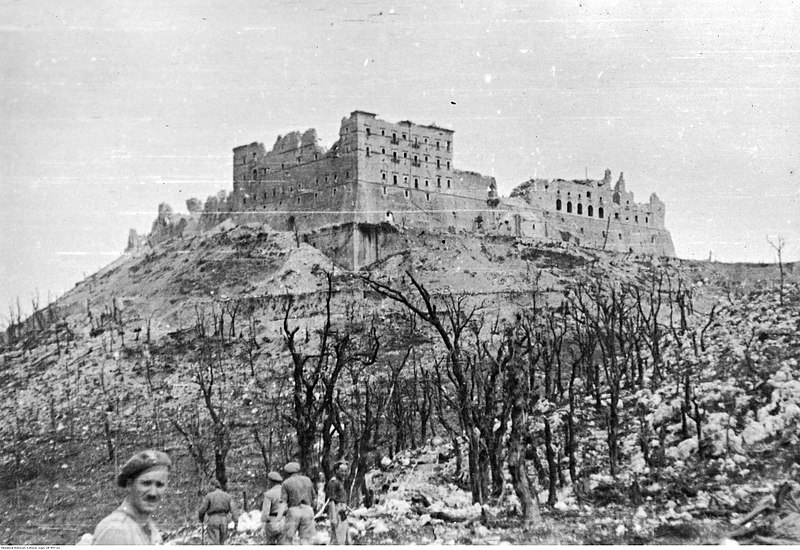
The Battle ofMonte Cassino (actually 4 battles) was the largest and bloodiest of the entire campaign. The Abbey/Monastery on the mountain top of Monte Cassino overlooked the valley of the river Rapido and blocked the allies path to Rome. From their strongpoints on the mountains, the German forces could call down artillery fire on the allied forces below. The battles were fought between January and May 1944 and eventually the German Wehrmacht forces were pushed back, but only after the total destruction of the Abbey and the nearby town of Cassino. The allied forces were drawn from many nationalities, including Britain, the USA, Canada, Australia/New Zealand, India & Poland. For the Poles, the battle was seen as a chance to take revenge on those who had invaded their country in 1939, and an opportunity to demonstrate the fighting prowess of the nation. They fought with great bravery and distinction and achieved both aims.
Fighting at Monte Cassino in the 2nd Polish Corps, 3rd Carpathian Rifles (Artillery) was a young Jozef Turczyn. In 1939 he had escaped Poland via Romania, and had joined the allied Polish forces in North Africa. He was a passenger in a truck at Monte Cassino when the vehicle hit an anti-tank mine. The driver and passenger either side of him were killed immediately. He was badly injured by shrapnel and temporarily blinded for several days. He was taken back to a military hospital where he was looked after by a young Polish Nurse, Krystyna. She had been captured by the Russians in 1939 when they invaded Poland, and they had exiled her to a prison work camp in Irkutsk, Siberia, before eventually being freed in 1941 when Russia joined the allies and then joining Polish forces as a Nurse in Iran. Krystyna recalled that the badly injured Jozef asked her where the nearest window to his bed was located and believing that he wished to throw himself out of it in despair, did not reveal where it was. The two young people grew fond of each other, but eventually, after Jozef’s health (and vision) began to improve under her care, their paths separated and they moved on, as tended to happen in wartime.
At the end of the war, in 1946 both found themselves in Britain, with Polish forces now being declared as “Enemies of the State” by Russia. Their paths crossed once again, and this time romance bloomed. They married in 1947 and a son, George was born in 1948. The Turczyn family emigrated to the United States in 1951 and lived there happily, and uneventfully until Jozef passed away in 1961 and Krystyna in 2000.
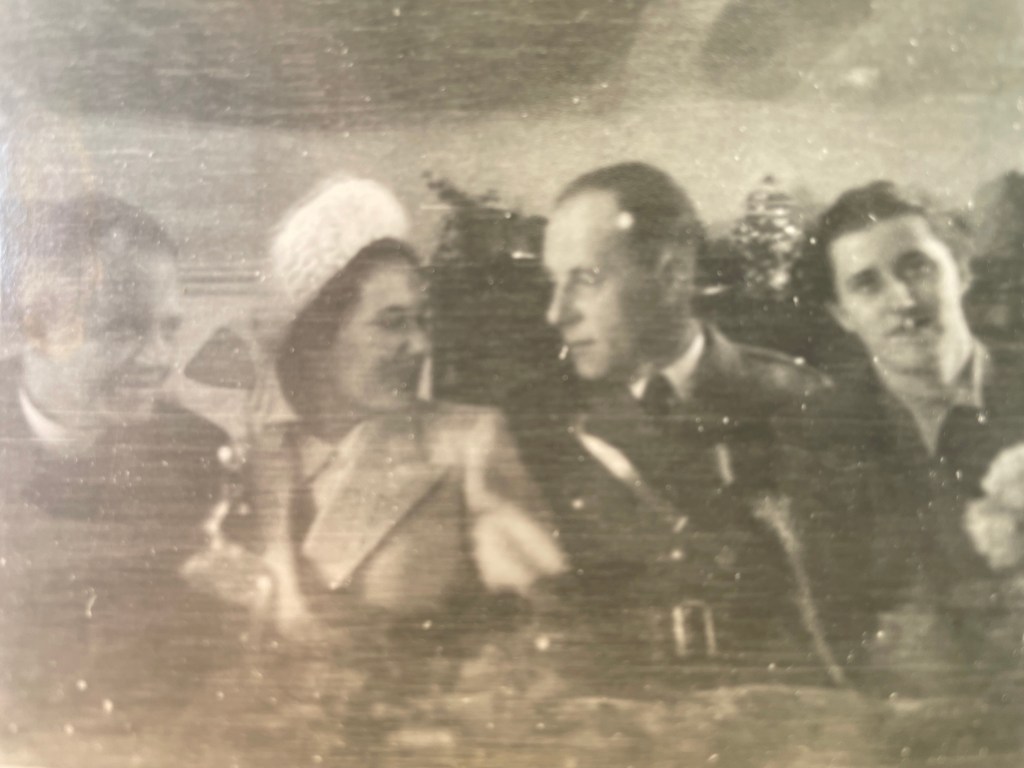
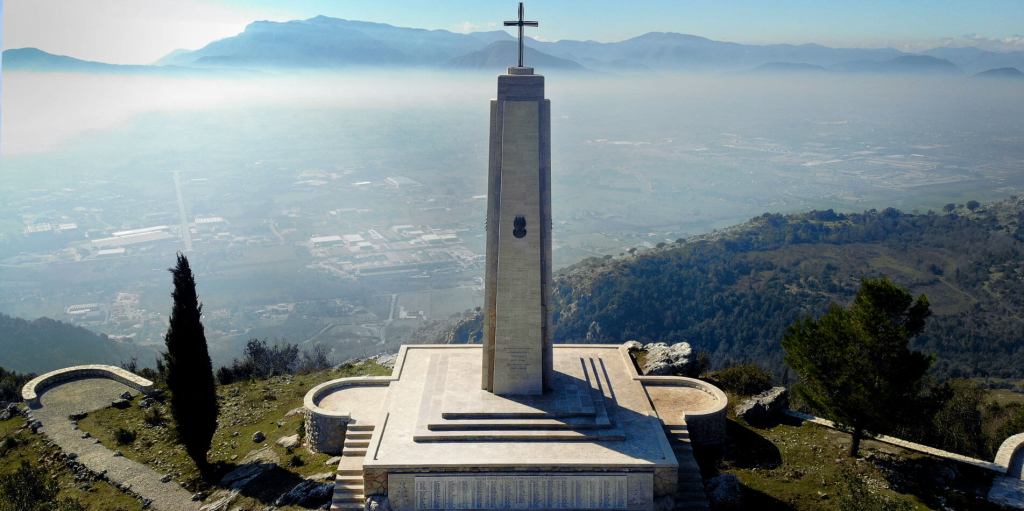
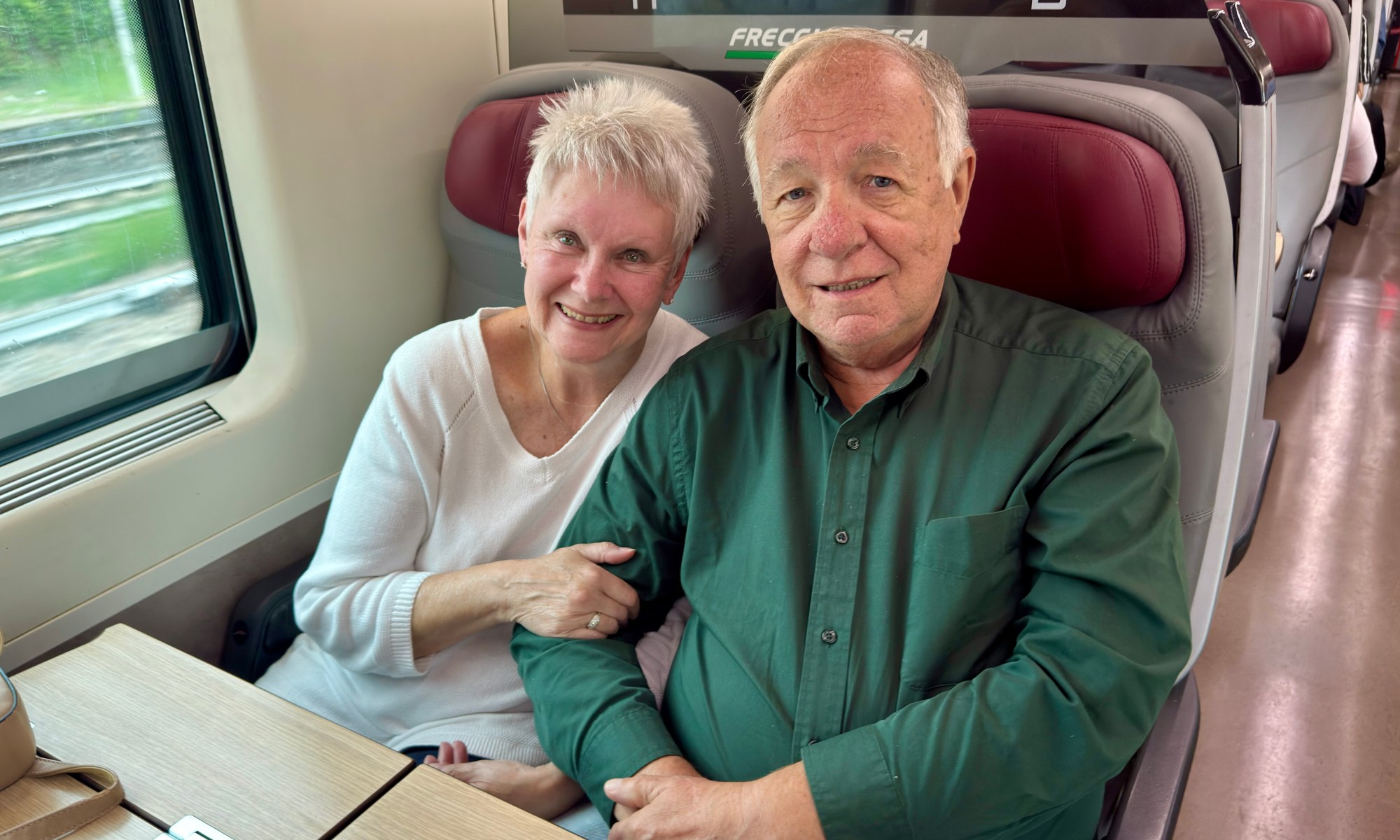
Their son George, and his wife Jane are two of my clients on this Tour, and they are greatly enjoying a more peaceful and enjoyable tour of Italy than his parents. During our rail journey tomorrow, from Venice to Naples, we will pass by the battlefield at Monte Cassino where the Monastery and town have been rebuilt and are sometimes visible from the train. I shall be pointing them out to everybody. George and Jane are staying on in Italy after the tour concludes and will be visiting Monte Cassino, accompanied by a battlefield expert guide to the very place where his father was injured and where his parents met. They will visit the Polish War Cemetery, the Domek Doctor (Doctor’s House) hospital and the monument on Hill 593 to the soldiers of the Carpathian Rifles. There George and Jane will take a moment to reflect on the extraordinary lives and series of events that brought together these two members of what is often known as “The Greatest Generation”. Although, at that time, I will be returning to Britain on a flight, I too will take a moment to think of them and their courage and sacrifice and the terrible sadness of those difficult times in Italy.